Thursday, November 28, 2013

Happy Thanksgiving in the Antelope Valley! - 11/28/2013

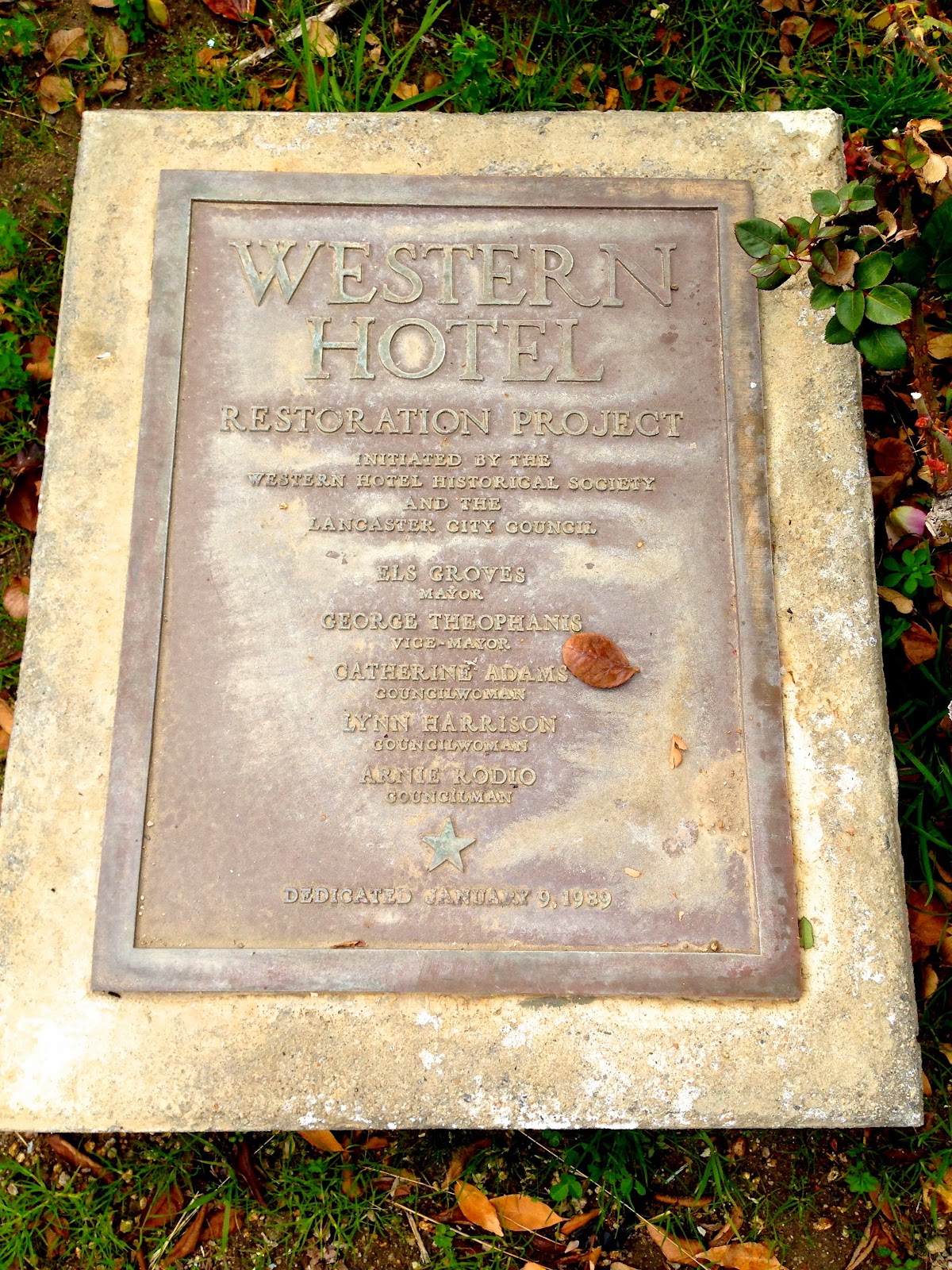
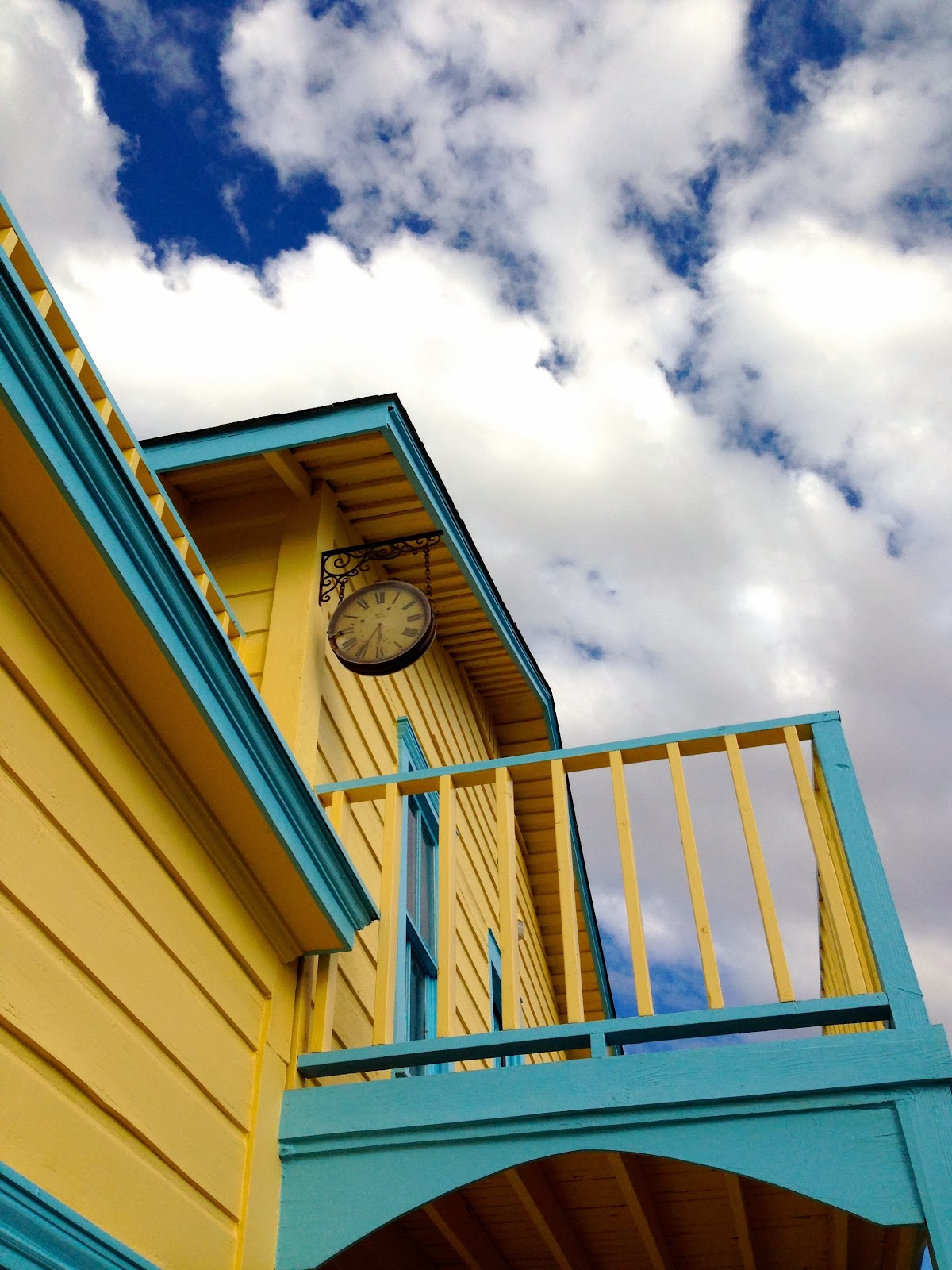
Happy Thanksgiving! Today we spent the holiday with my family up in Palmdale, so it was a great opportunity to visit the ONE California Historical Landmark in the Antelope Valley: the Western Hotel (CHL #658).
The Western Hotel dates back to 1888. It is Lancaster's oldest surviving structure. The building is maintained by the Lancaster Museum of Art and History (MOAH). According to MOAH, "at the turn of the century, the two-story hotel was a vital part of local culture, accommodating everyone from muleskinners to British lords. After years of different owners and purposes, the hotel fell into a state of disrepair during the 1970s and was condemned. Lancaster residents, rallied to save the once-grand hotel. This resulted in the formation of the Western Hotel Historical Society. Restoration was completed in 1988, and the hotel/museum now houses photographs and artifacts that depict the history of the people who built, worked and lived in the Western Hotel. You can almost feel the mood of the 1890s as you walk through the long, narrow hallways and wood-paneled rooms."
In a connection to our visit from last week, the Western Hotel also housed construction crews working on the Los Angeles Aqueduct from 1905 to 1913.
According to the MOAH website, the Western Hotel is open 11 a.m. to 4 p.m. on the second and fourth Friday and Saturday of every month. We'll have to return when they're open to check out the interior.
But right now, it's time to head on over to the Limón house for Thanksgiving dinner! Happy Thanksgiving 2013!

Sylmar and San Fernando - 11/24/2013

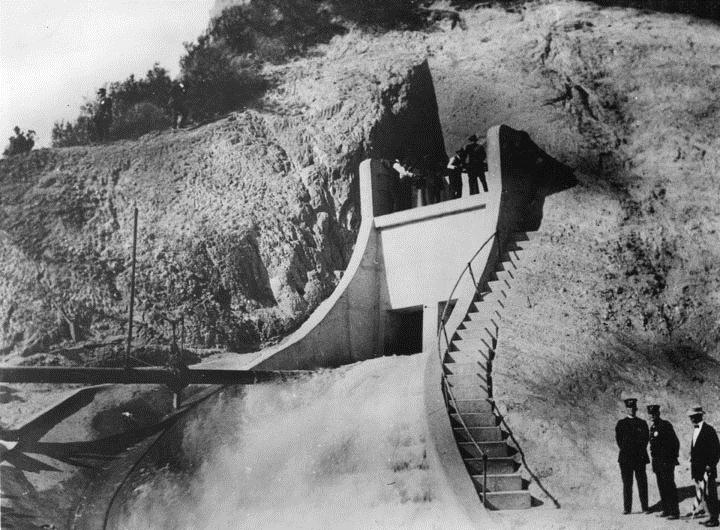
Today's adventures took us through Sylmar and San Fernando, with an unexpected final stop in Newhall. First stop was The Cascades (CHL #653). It's appropriate that this month we observe the 100th anniversary of the completion of the Los Angeles Aqueduct.
William Mulholland was the LADWP's chief engineer at the turn of the century, and it was his job to bring enough water to Los Angeles to quench the thirst of this burgeoning burg. Much to the chagrin of the residents of the Owens Valley, Mulholland chose to tap into the Eastern Sierras to bring water 233 miles southwest.
photo courtesy of the Los Angeles Department of Water and Power

The Cascades here served as the site of the "grand opening" ceremony of the Owens River to the people of the San Fernando Valley and the Los Angeles basin. On November 5, 1913, Mulholland and his hydrological engineers opened the floodgates. Since that time, the city determined that a second aqueduct would be needed, and the larger spillway you now see on the hillside (which is far more prominent than the original) is the Second Los Angeles Aqueduct, completed in 1970. Mulholland died in 1935, and therefore never got to see the completion of the second aqueduct. He did, however, make additional plans for securing water for the city of Los Angeles: the San Francisquito Canyon Reservoir. To accomplish this, Mulholland commissioned the building of the St. Francis Dam (just a few miles north of our very own Santa Clarita Valley). I don't want to give away too many dam details, because we have a separate dam trip we will be making in a few weeks. It was a dam disaster, and in fact it was the worst civil engineering disaster in U.S. history.
Our second stop of the day was the San Fernando Cemetery (CHL #753). It is the final resting place for a number of pioneers who settled in the San Fernando Valley in the 1800s. According to the cemetery roster, maintained by the San Fernando Valley Historical Society, burials began here in the late 1880s or early 1890s, there are 10 "John Does" buried there, we have a Civil War veteran from Illinois (Willard D. Paine), and the last burial was in 1939.
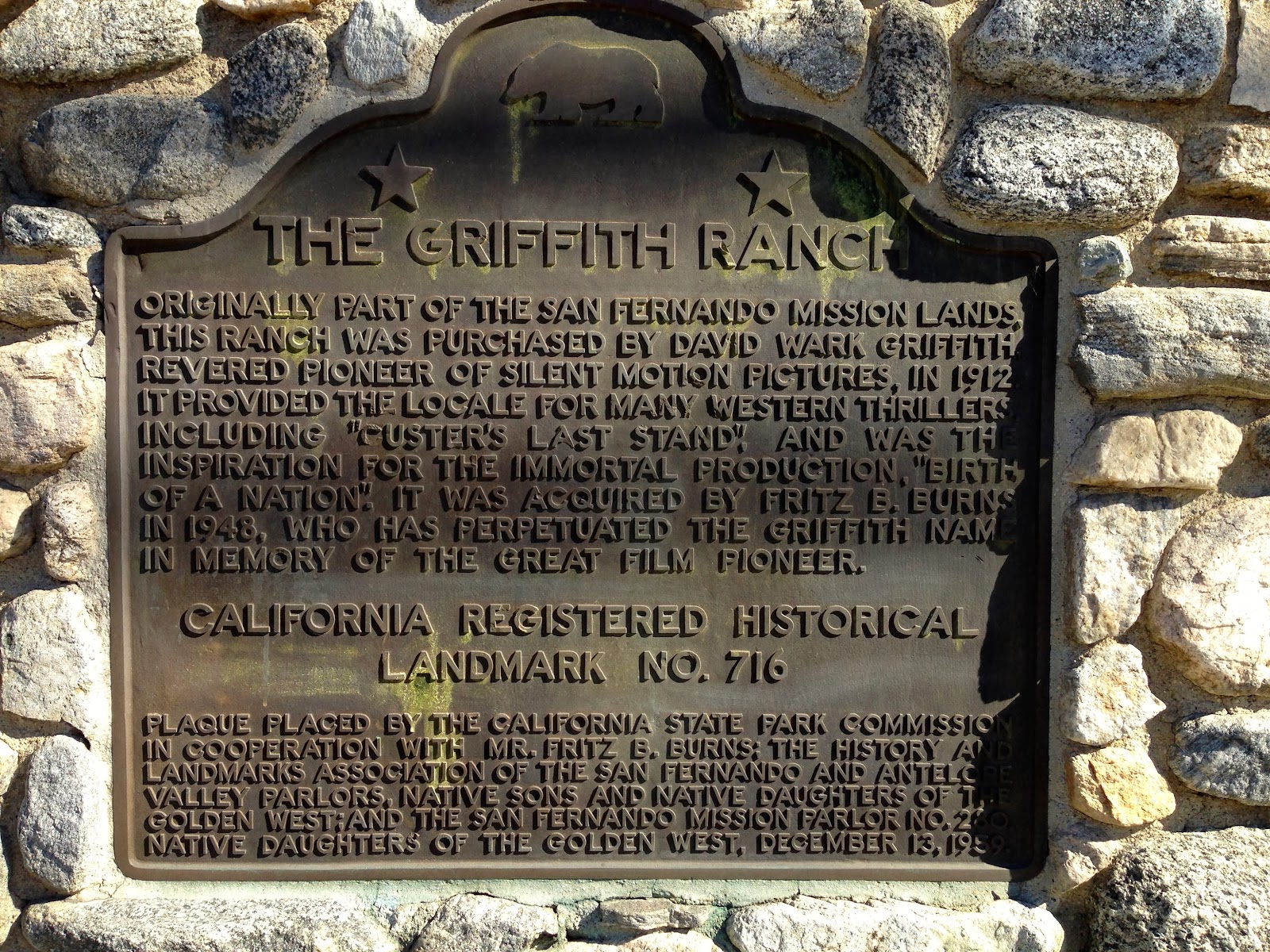
The cemetery was closed (it's only open the third Saturday of every month), so it's on to our next stop: Griffith Ranch (CHL #716).
 D.W. Griffith was the producer and director of the groundbreaking (and controversial) Birth of a Nation in 1915. This ranch was the inspiration for the film. You can watch the film in its entirety on YouTube (it's in the public domain) here: http://www.youtube.com/watch?v=iEznh2JZvrI
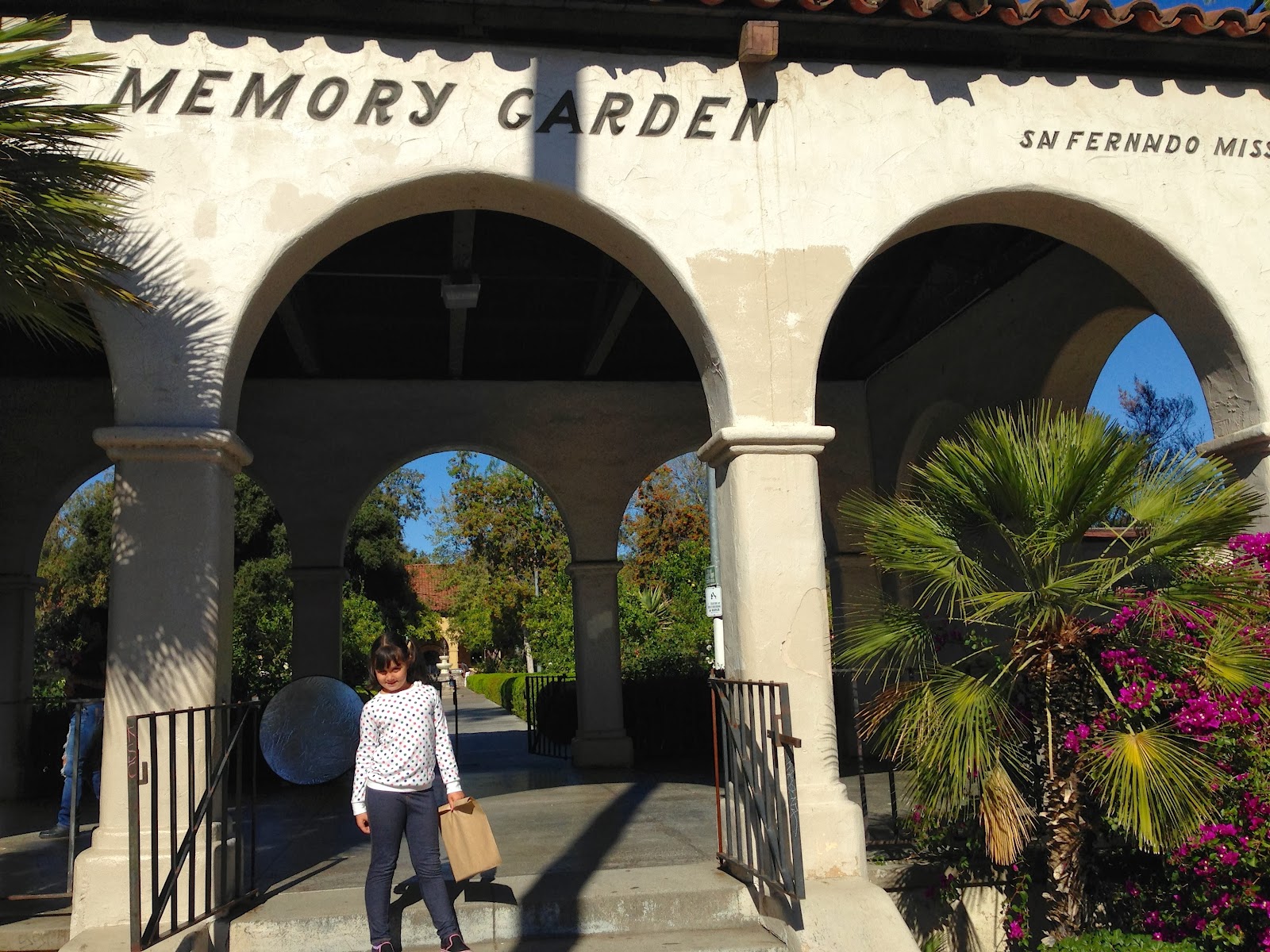
Our next stop was the San Fernando Mission complex. Before we arrived at the Mission itself, we stopped at the Brand Park (Memory Garden) (CHL #150). From the state: "Brand Park, also called Memory Garden, was given to the city for a park November 4, 1920. It is a part of the original land grant of Mission San Fernando de Rey de España, and the colorful and picturesque atmosphere of the early California missions is preserved in Memory Garden."
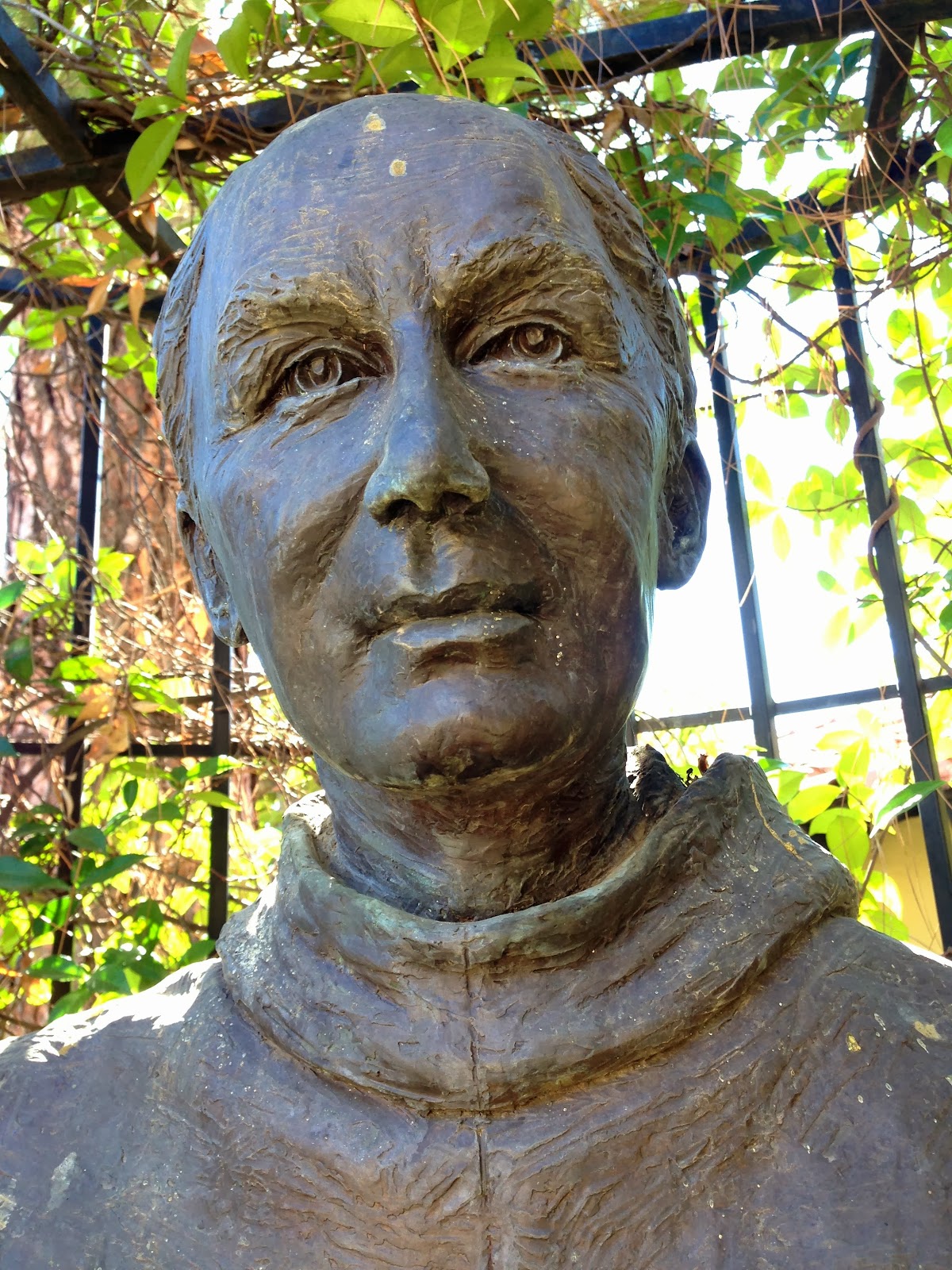
The grounds were beautiful. In the photo below, you can see the statue of Father Serra with the arches of the mission just across the street in the background.

So we then crossed the street to the mission. Incredibly, this is my FIRST time ever at Mission San Fernando Rey De España (CHL #157)!
Today was Father Junipero Serra's 300th birthday, so it was only fitting that we should visit a mission today. I asked the young woman at the counter, "So, are you doing anything special for Father Serra's 300th birthday today?"

Her response: "No." How sad! Nevertheless, the mission was beautiful.
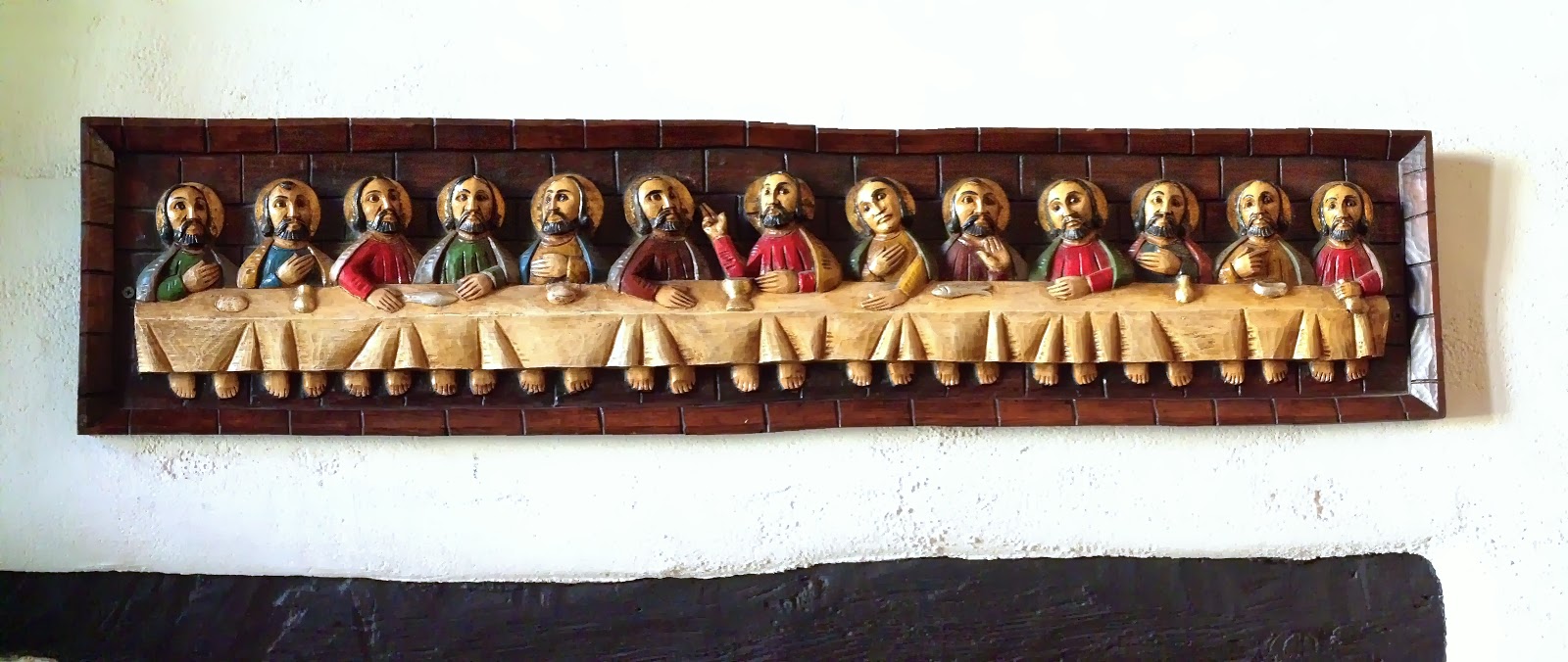
This Last Supper carving is right above the wine cellar. I thought it was cool. The mission is actually kind of a mish-mash of all sorts of different types of art (painting, sculpture, carving) and so much of it has no signage or interpretation whatsoever.
I never thought of it, but back in the early 1800s, it made more economic sense for the missions to make their own wine, if they could. They certainly did here in San Fernando. Here's the wine cellar.
Peace.
Again, going along with the "mish-mash" theme here at the mission, there was an entire room dedicated to all the different flags that have flown over California. Argentina, really? I had no idea. I looked into it a little further, and Argentina has a pretty weak claim. It's not nearly as strong as Spain, Mexico, Britain, or Russia.
I'm excited to go to two different places now: the Southwest Museum and Gavilán Peak.
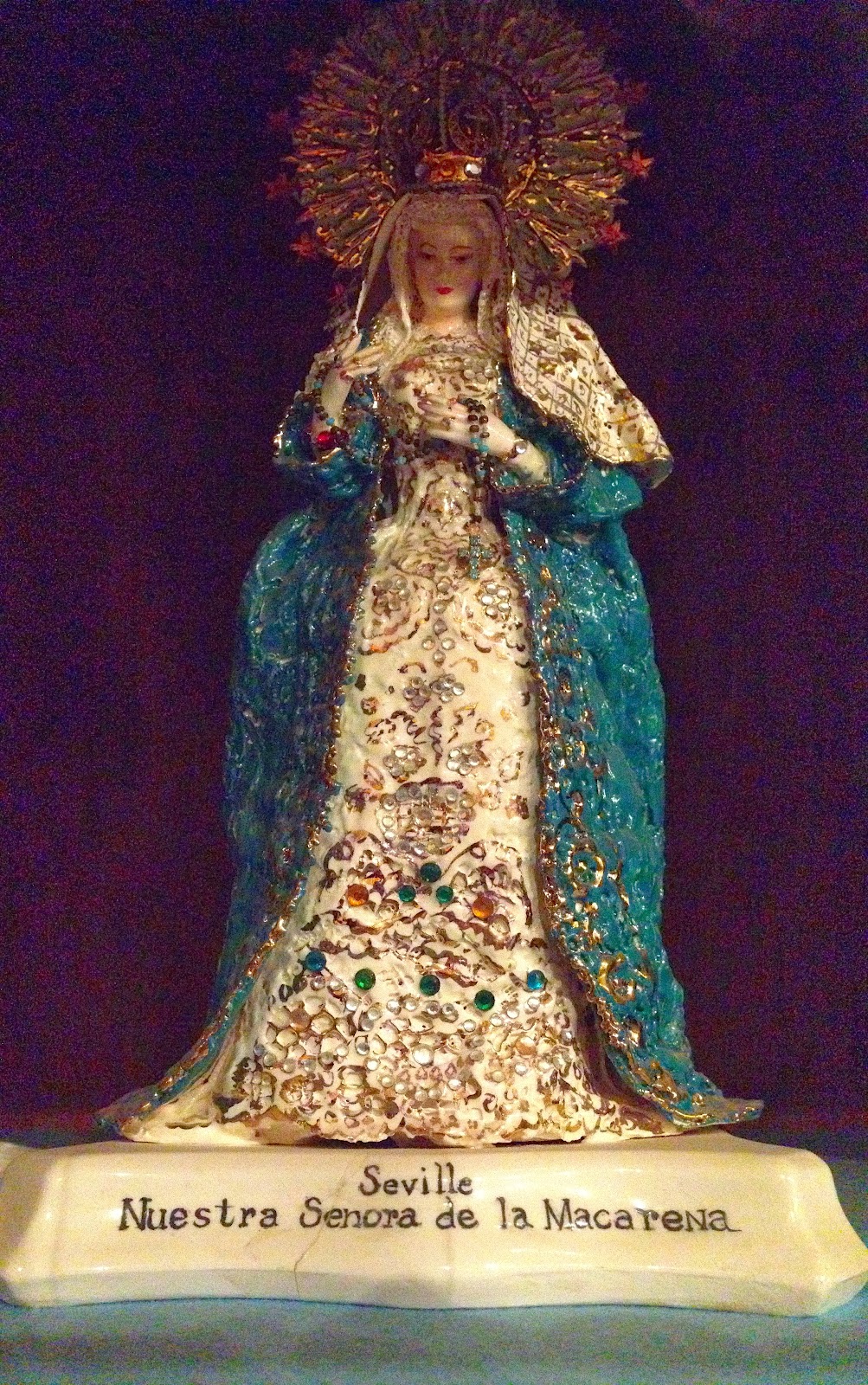
There is one room that has absolutely NOTHING to do with the history of the mission, although it is connected to the Catholic Church: the Madonna Room. It's FULL of Madonnas from all over the world. Here's one from Alaska. "Our Lady of the Artic."
Our Lady of the Macarena. Does she dance?
 Libi is standing by an original adobe wall.
That brick is over 200 years old!
Again, the grounds were beautiful, and were so fortunate to get such beautiful weather today!
Father Serra, according to accounts, was only about 5'1" or 5'2". That was the average height for Mallorcan men (Serra's home island) at the time.


Our visit has ended, but just one quick photo of the mission back in the late 1800s, in quite a state of disrepair.
And now here is the photo I took of that same corridor. The mission has been beautifully restored and maintained.
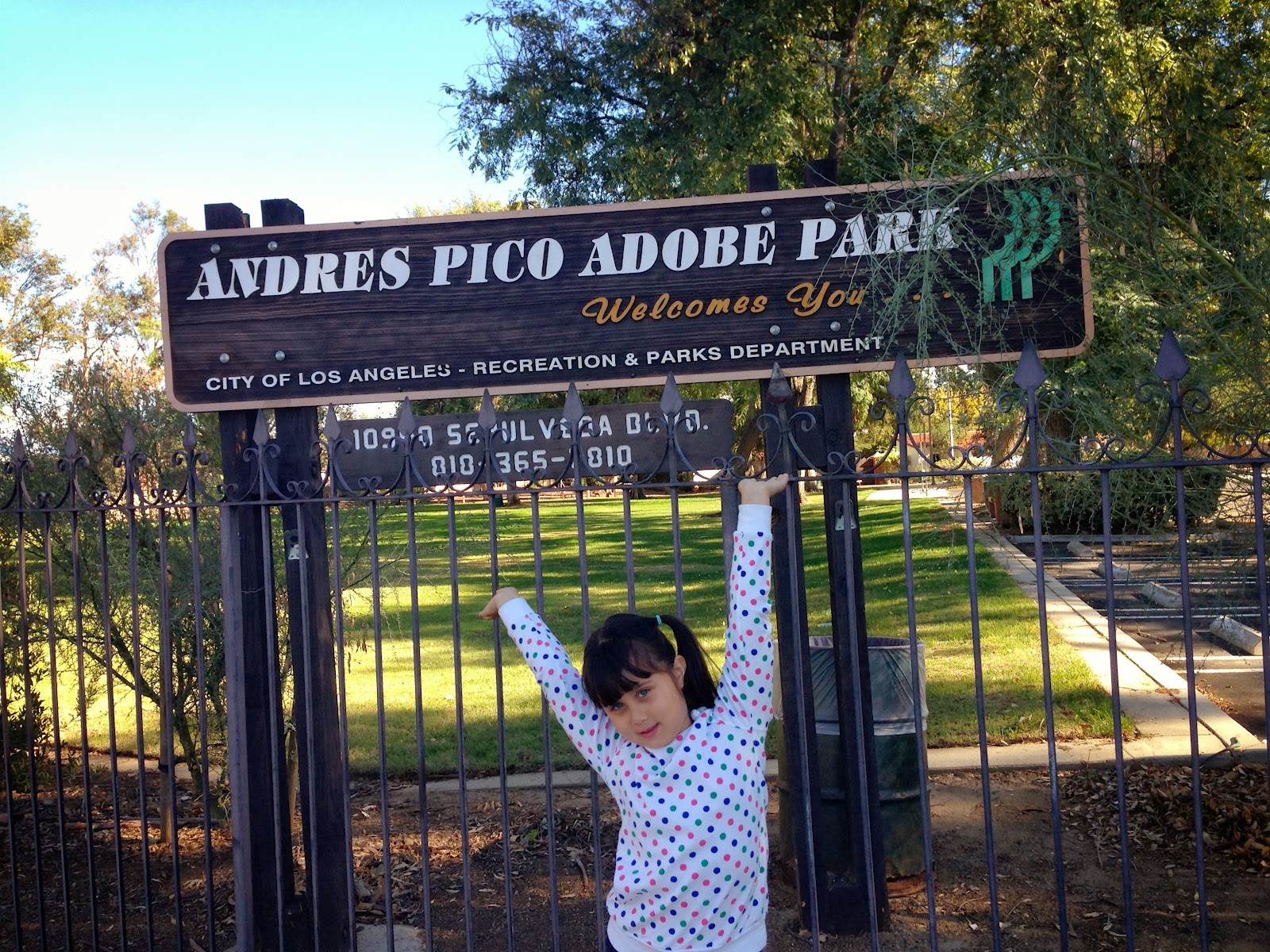
Our next stop was the Romulo Pico Adobe (CHL #362). The grounds are closed today, so this is as close as we got.
We were supposed to be done for the day, but we decided to hit ONE of the Santa Clarita sites on our way back to the house. It's just inside the gates of Eternal Valley cemetery (which is THE cemetery for Santa Clarita). 
And here it is: Lyons Station (CHL #688). Before these grounds were a memorial park, it was a stagecoach stop, post office, telegraph office, and trading post in the early days of the Santa Clarita Valley. Lyons Station was a regular stop on the Butterfield State line, and was also a rest stop for miners headed for the Kern River gold rush in the early 1850s.
Somewhere along the way, the last name "Lyon" has been transformed into "Lyons." The plaque puts the "s" at the end of Sanford and Cyrus' last names.
However, if you look at Sanford's last name, it is clearly "Sanford Lyon." His brother's tombstone is adjacent to Sanford, and it also says "Lyon." At any rate, there are grave sites that date back to the 1880s here in the "Garden of the Pioneers." We seem to be finding a lot of California history in cemeteries.
Next weekend is Thanksgiving weekend, and who knows where we will end up! All I know is I am thankful to have such a wonderful, adventuresome wife and daughter to share all these adventures with.

Sunday, November 24, 2013

Northwest Corner of Los Angeles County - 11/17/2013

What an amazing day today! Here's how it went today:

1. Impressive hidden gem in the San Fernando Valley
2. Weird!
3. Behind barbed wire
4. A Hollywood landmark that's not in Hollywood
5. A beautiful oceanside villa
6. A hilltop view of the Pacific

We live about 25 miles away, and yet we never knew just how impressive Los Encinos State Historic Park (CHL #689) was.
Los Encinos has had several owners since the adobe was first built in 1840. Someone from the state of California is passionate about preserving this site, and has done an incredible job. The nine-room adobe is full of interpretive displays, each telling the story of the seven different owners of the property before it was taken over by California State Parks.

There is one room just dedicated to telling the story of the building's ongoing preservation, including a thorough explanation of the heavy damage the building sustained in the 1994 Northridge earthquake. We've been to several sites managed by the State Park system, and so far this is absolutely the best in terms of interpretation and story-telling.
We got so excited when we saw this next part of the display! 


The S-shaped metalwork in the display may not have meant much to us at all, except for the fact that just last weekend we saw these on the side of the old Sacramento Union building. We looked up and saw this on the side of the building, and wondered what it was. Now we know! The fixture was called a "tie-rod brace," and it was used to add stability to buildings back in the 1800s.
OK, so let's return from Old Sac and come back to Los Encinos. Before we left, Heather and Libi took some time to feed the ducks and geese.

 We got a few more shots of the grounds.
 This must be a great place for a field trip! As soon as one of Libi's classes is ready to come visit Los Encinos, I will have to take a day to chaperone!
 Overall, a wonderful visit to a hidden treasure!
 One man's treasure is another man's, "Huh?" And that was exactly my reaction to the next landmark, Old Trapper's Lodge (CHL #939). Old Trapper's Lodge is one of a series of "939" landmarks all around the state. They are all tributes to 20th century folk art, and this was a little strange for my taste. Right next to the animal sciences building on the campus of Pierce College in Woodland Hills are these unusual pieces of art. The first piece was created by artist Claude Bell, and was commissioned by North Hollywood motel owner John Ehl. In his early years, Ehl was a trapper, and wanted to honor both his past and California's pioneer history by commissioning Bell to create a likeness of a young "Trapper John" (below).

After seeing the first piece, Ehl himself apparently thought, "I could do that," and so in 1951 began sculpting the rest of the collection. The collection includes an entire tribute to the Old West and pioneer times, complete with fake Old West tombstones.
 
Libi was a little creeped out by the whole thing, and refused to be photographed with any of the figures; she would only stand next to the plaque. I have to admit, I was a little weirded out myself. I somehow felt like these statues were like something out of Pee-Wee's Big Adventure. It turns out, there was a connection! Remember the original sculptor, Claude Bell? According to Weird California, Bell was also the sculptor of the brightly-colored Giant Dinosaurs of Cabazon. And any true Pee Wee fan will know that the Cabazon dinosaurs featured prominently in the film. To finish the John Ehl story, he died in 1981. In 1985, his motel was set to be demolished to make room for the expansion of the Burbank Airport. The motel was torn down, but not before the sculptures were saved and transferred to Pierce College. Again according to Weird California, every few years a caretaker comes to clean, repair, and re-paint the statues. They even clean up the campus around the display. If only there were dedicated volunteers caring for all of California's landmarks.
We traveled from mysterious upkeep to behind-the-razor-wire neglect. Just beyond this fence in Chatsworth is all that's left of the Chatsworth Calera (CHL #911). From the state: "The Chatsworth Calera is one of the few surviving representative structures of the early 19th century lime industry. This kiln marked the introduction to California of the European industrial process for vitrifying limestone building blocks which were used in the construction of the missions."
 The land is owned by the Los Angeles Department of Water and Power. The fence is as close as we could get.
Our next stop was on the site of the Leonis Adobe in Calabasas, so we headed there next. However, we were also really hungry. Our original thought was to eat at Sagebrush Cantina (it was RIGHT there). But I'm getting cantankerous in my old age, and I just got a bad vibe from that place when we walked up to put our name in. Instead, we walked across the street and stumbled across Pedaler's Fork. It's a restaurant/bicycle shop, they focus on organic, sustainable, ethical food, so we felt good about eating here.
Alright, lunch is done. By the way, the food was delicious. It needed a touch more seasoning, and the kitchen was slammed (our food took over 30 minutes) but overall delicious. I guess they've only been open six months. I would go back. OK, on to Leonis Adobe, and more importantly, to Plummer House (CHL #160).

Plummer House was the oldest house in Hollywood, until threatened with demolition in 1980. Eugenio Plummer and the Leonis family were friends back in the 1870s, so it made sense to the trustees of the Leonis Adobe when the run-down, half burned-down Plummer House was about ready to be destroyed. Today, Plummer House is used as the visitor's center and gift shop for Leonis Adobe.
Eugenio Plummer was an interesting character. He was friends with Buffalo Bill Cody and famous bandit Tiburcio Vasquez. Helen Hunt Jackson, when doing research for her 1884 novel Ramona, consulted with Plummer to find out what old California was like when he was growing up.
 From Calabasas, the Ippolito family traveled west along Highway 101 to Malibu, to one of Los Angeles County's greatest hidden treasures: Adamson House (CHL #966). Adamson House was a Spanish Colonial Revival built in 1930, and is known as one of the richest examples of Malibu Potteries.

The exterior is beautiful! It overlooks the Pacific Ocean, and it is very well maintained by California State Parks.


I was able to get one shot of the dining room by holding my phone up to the one window not covered by a screen.

We have to return on a day when the House is open for visitors. In the meantime, we'll have to settle for the beautiful exterior.
When we were looking around the grounds of Adamson House, I got the feeling like I had experienced Malibu Potteries-style tiles before. I did a little research and discovered that Adamson House was built in 1930. During my senior year at UCLA, I was the Resident Assistant at a house for transfer students. The UCLA Office of Residential Life had purchased an old sorority house and converted it into on-campus housing. I spent my senior year of college in 720 Hilgard, and was given the former studio apartment of the sorority house mother. I moved out of that apartment in 1996, but I still remember the tile from bathroom--it was beautiful! I checked real estate records online, and 720 Hilgard was built in the year 1930. Is it possible that Zeta Tau Alpha, when they built their house, contracted with Malibu Potteries? I may never know. The university demolished the old house in 2007 to build brand new graduate housing (I just found this out with a little Internet research). Sniff.

Alright, well now that I've had that sad moment (I guess I should have taken more photos of the inside of my apartment while I had the chance--never thought I would want to reference them 17 years later), let's move on to our final stop on today's journeys: Point Dume (CHL #965). From the state of California: "On November 24, 1793, English explorer George Vancouver, commander of an expedition to determine the extent of settlement of the northwest coast of America, named this rocky promontory, Point Dume, after his Franciscan friend, Father Francisco Dumetz, at Mission San Buenaventura. Point Dume is the western terminus of Santa Monica Bay and has been an important landmark for navigators since Vancouver's voyage in 1793."
This has been our first landmark that was actually a little bit of a hike! But the view was beautiful and well worth it!

In this panorama shot from the promontory, you can see north to Point Magu on the left, and you can see out to Rancho Palos Verdes to the right.
If you are planning a trip to Point Dume, here's the entry point (below). Coordinates are here: N 34° 0' 11.14" W 118° 48' 26.538. In fact, I have placed the coordinates of several of our harder-to-find locations in the Google Docs spreadsheet of all our locations. You can find the spreadsheet by clicking on the link above listed as "Directory of Sites Visited."
Finally, for you Marvel fans, Point Dume is the location of Tony Stark's fictional hilltop Malibu mansion in the three Iron Man films. Next week: Sylmar and San Fernando!

Format for hashmark fragment identifier

Click the edit icon to reveal code